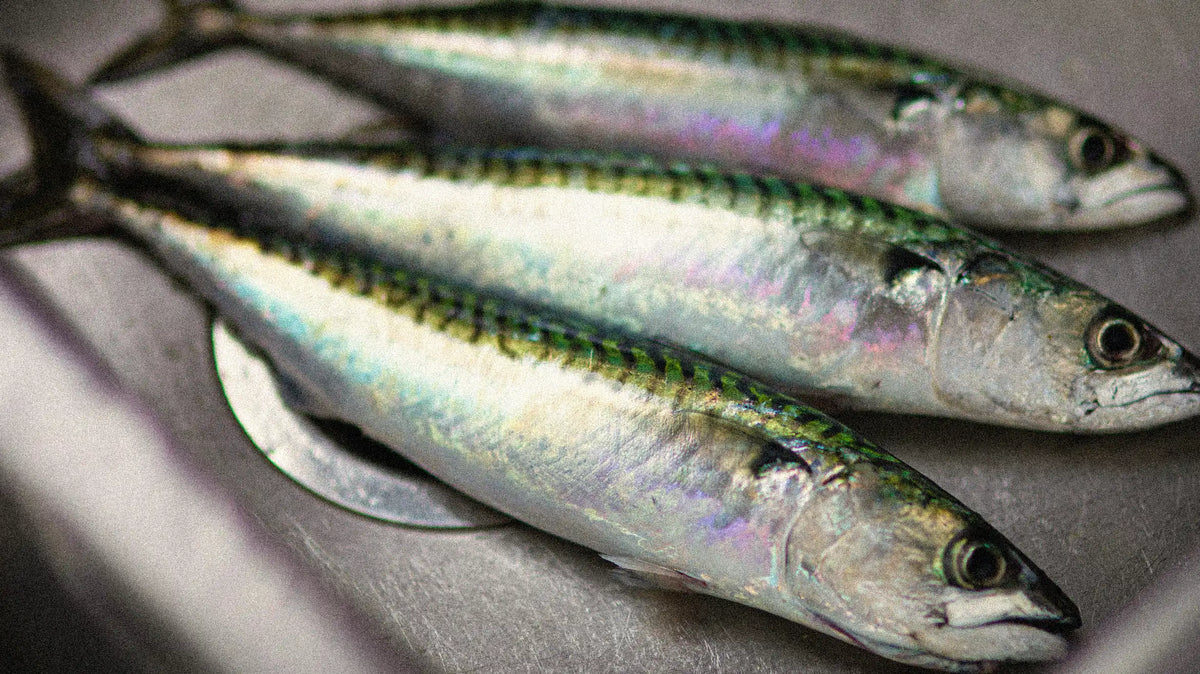
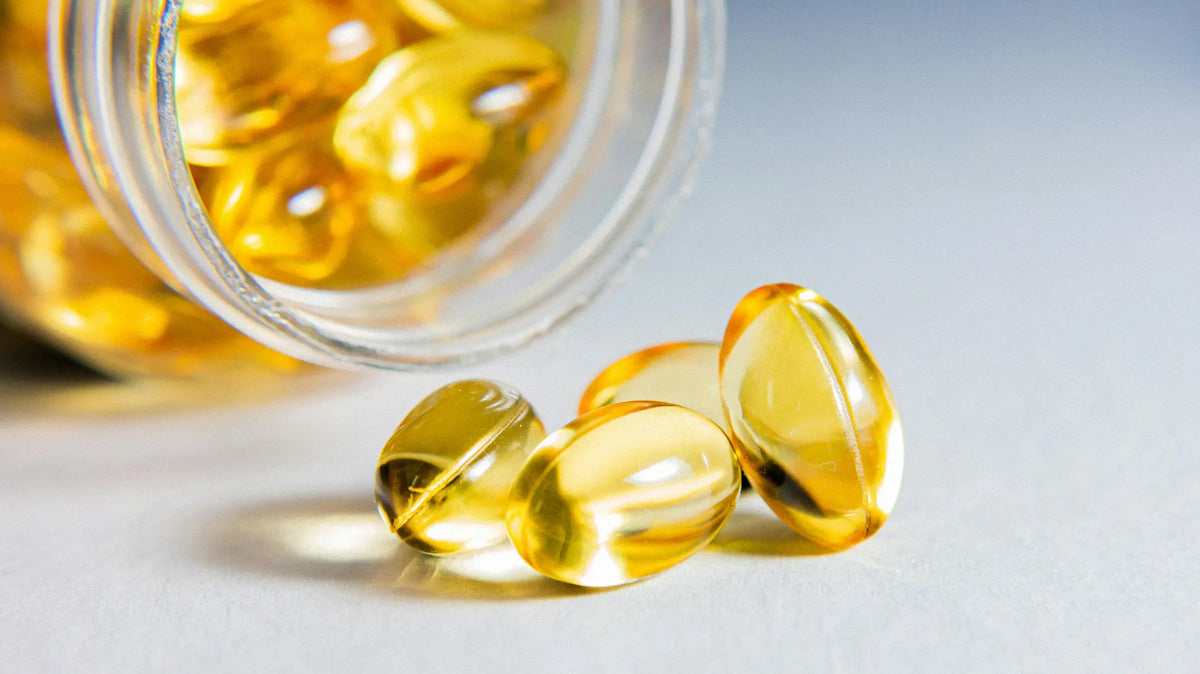
Directly extracted from microalgae, with no fishy odour.
Fish do not produce DHA: they store it after consuming it from microalgae, which are at the base of the marine food chain. Our oil takes it straight from the source: 250 mg of DHA per capsule, the daily amount that contributes to the maintenance of normal brain function and normal vision.
Brain - Contributes to the maintenance of normal brain function.
Vision - Contributes to the maintenance of normal vision.
Pregnancy and breastfeeding - Contributes to the normal development of the brain and eyes.
Puts no pressure on krill stocks and respects the ocean.
Our oil naturally reaches 52% DHA (250 mg per 482 mg of oil) — without using the solvents that part of the industry relies on to artificially concentrate DHA.
At the source, without the drawbacks of fish
Extracted directly from microalgae, without the fishy burps or taste typical of some omega-3 supplements.
DHA protected at every stage
A plant-based shell with a high barrier against oxygen and moisture, combined with natural tocopherols and ascorbyl palmitate, which limit oxidation of the oil — a multi-level protection system, measurable via TOTOX.
French strain
Our DHA comes from the French strain FCC-3204, selected for its natural richness in DHA. Every batch is tested to ensure its quality, compliance and full traceability.
Our Omega 3 - DHA is particularly suitable if you:
consume little or no oily fish;
wish to support the maintenance of normal brain function and the maintenance of normal vision;
are looking for a daily source of omega-3 without fish oil;
follow a vegetarian or vegan diet;
are pregnant or breastfeeding and wish to supplement your DHA intake, on the advice of a healthcare professional.
In France, DHA intake often remains insufficient. In the INCA2 consumption study, 85% of adults had an intake of less than 250 mg of DHA per day.
The situation is also striking during pregnancy: data examined by Anses show that 50 to 75% of the pregnant women studied had insufficient DHA intake.
A single capsule — 250 mg of DHA derived from the microalga Schizochytrium sp. — is enough to fill this daily gap.
Just 1 capsule per day — 250 mg of DHA
DHA contributes to the maintenance of normal brain function¹ and the maintenance of normal vision¹
Pregnancy & breastfeeding
Maternal intake of DHA contributes to the normal brain development and the normal development of the eye of the foetus and breastfed infants²
¹ The beneficial effect is obtained by the daily consumption of 250 mg of DHA.
² The beneficial effect is obtained by the daily consumption of an additional 200 mg of DHA, in addition to the recommended daily intake for adults of 250 mg of DHA + EPA.
Science sometimes goes further than what we can claim. Regulations strictly govern the benefits we can communicate. To deepen your knowledge about DHA, you can consult the scientific literature available on PubMed.
Take 1 to 4 capsules daily, depending on your needs, swallowing each with a large glass of water during a meal, preferably one containing some fat.
If taking 3 to 4 capsules daily, ideally spread them between two meals.
Taking them during a meal promotes the absorption of omega-3s, digestive comfort & the bioavailability of DHA.
Natural tocopherols and ascorbyl palmitate help preserve the DHA in the formula.
This food supplement is not a substitute for a varied and balanced diet and a healthy lifestyle. Do not exceed the recommended daily dose. Keep out of reach of young children.
In case of medical conditions or medical treatment, seek advice from a healthcare professional before use.
Particular vigilance is recommended:
in case of known hypersensitivity to any of the ingredients;
in case of anticoagulant or antiplatelet treatment, or coagulation disorders: seek the advice of a healthcare professional before use.
Storage
Store in its original packaging, in a cool and dry place.
Keep away from light, heat and moisture.
After opening, storage in the refrigerator is recommended to best preserve the freshness of the DHA.
Ingredients
Schizochytrium sp.
The direct source of our DHA
Schizochytrium sp. is a microalga naturally rich in DHA, an essential dietary omega-3. Microalgae are at the origin of the marine food chain: it is in them that DHA is formed, long…
Schizochytrium sp. is a microalga naturally rich in DHA, an essential dietary omega-3. Microalgae are at the origin of the marine food chain: it is in them that DHA is formed, long before it is found in fish.
Our FCC-3204 strain, of French origin, i…
Schizochytrium sp. is a microalga naturally rich in DHA, an essential dietary omega-3. Microalgae are at the origin of the marine food chain: it is in them that DHA is formed, long before it is found in fish.
Our FCC-3204 strain, of French origin, is cultivated in a controlled environment to extract this DHA at its root, without using fish oil. The benefit for you: a purer oil — free from the contaminants that can accumulate along the marine food chain (heavy metals in particular) — and without the fishy taste or aftertaste typical of some supplements. Each batch is tested for its DHA content, its oxidation level and its compliance with regulatory contaminant limits.
This microalgal oil is authorised in the European Union for food supplements, up to 1,000 mg of DHA per day — the maximum set by the regulations.
Modified starch
A plant-based capsule designed to protect the oil
Our plant-based capsule, made from modified starch and glycerol, is an alternative to animal gelatine and carrageenan-based shells. Its high barrier limits the oil’s exposure to ox…
Our plant-based capsule, made from modified starch and glycerol, is an alternative to animal gelatine and carrageenan-based shells. Its high barrier limits the oil’s exposure to oxygen and moisture, two factors that accelerate the degradation of DHA.…
Our plant-based capsule, made from modified starch and glycerol, is an alternative to animal gelatine and carrageenan-based shells. Its high barrier limits the oil’s exposure to oxygen and moisture, two factors that accelerate the degradation of DHA.
An oil tested against oxidation
TOTOX (2 × peroxide value + anisidine value) measures the overall oxidative state of the oil — achieved thanks to all the protections in the formula. The lower its value, the less oxidised the oil, and the better it retains its freshness and nutritional qualities.
Glycerol
Softens the plant-based shell
Glycerol, or vegetable glycerine, is the ingredient that gives the plant-based shell of our capsules — made from modified starch — its supple, resilient texture. Derived from plant…
Glycerol, or vegetable glycerine, is the ingredient that gives the plant-based shell of our capsules — made from modified starch — its supple, resilient texture. Derived from plant raw materials, most often vegetable oils, it acts as a plasticiser: i…
Glycerol, or vegetable glycerine, is the ingredient that gives the plant-based shell of our capsules — made from modified starch — its supple, resilient texture. Derived from plant raw materials, most often vegetable oils, it acts as a plasticiser: it prevents the shell from hardening or becoming brittle over time.
In practical terms, glycerol retains some moisture within the shell itself — this is what keeps it supple and pleasant to swallow. This suppleness, distinct from the capsule's barrier against outside oxygen and moisture, also protects the oil: a shell that stays supple limits cracking right up to the last dose.
Natural tocopherols
Protect the oil from oxidation
Natural tocopherols belong to the vitamin E family. In our capsules, they play an antioxidant role: they protect sensitive fatty acids such as DHA by limiting oxidation reactions t…
Natural tocopherols belong to the vitamin E family. In our capsules, they play an antioxidant role: they protect sensitive fatty acids such as DHA by limiting oxidation reactions triggered by oxygen, light or heat.
This role is particularly valuable…
Natural tocopherols belong to the vitamin E family. In our capsules, they play an antioxidant role: they protect sensitive fatty acids such as DHA by limiting oxidation reactions triggered by oxygen, light or heat.
This role is particularly valuable in an oil rich in omega-3s: oxidation gradually impairs its freshness, smell and quality — this is rancidity. By slowing it down, tocopherols help maintain good oxidative stability over time, one of the factors measured by TOTOX.
They work at the heart of the oil phase, as close as possible to the DHA: a protection that complements that of the capsule shell, which limits oxidation from the outside.
Ascorbyl palmitate
Completes the antioxidant system
Ascorbyl palmitate is a fat-soluble form of vitamin C, meaning it can disperse in fats. This property allows it to act directly within the oil, where sensitive omega-3s such as DHA…
Ascorbyl palmitate is a fat-soluble form of vitamin C, meaning it can disperse in fats. This property allows it to act directly within the oil, where sensitive omega-3s such as DHA are found.
It helps limit oxidation of the oil — a natural phenomeno…
Ascorbyl palmitate is a fat-soluble form of vitamin C, meaning it can disperse in fats. This property allows it to act directly within the oil, where sensitive omega-3s such as DHA are found.
It helps limit oxidation of the oil — a natural phenomenon promoted by oxygen, light and heat — and its action goes further: it also helps regenerate the natural tocopherols once they have neutralised free radicals, thus prolonging their effectiveness over time.
Used at a low dose, it is an integral part of the formula's antioxidant protection system — alongside the plant-based shell and the tocopherols — designed to best preserve the quality of the DHA until consumption.
What our customers say
4.82 ★ (55)
Verified
The complete routine
The answers to your questions
Anthony Sehl
PhD in chemical sciences – DHA specialist.
“I devoted my doctorate to studying the digestion and assimilation of DHA, then worked for six years on the production of DHA-rich microalgal oils.
The quality of an omega-3 supplement does not depend solely on the quantity stated on the label: the origin of the oil, its oxidation level and the way it is protected are just as decisive.
For Thaléïs, we selected an oil from a French strain, naturally rich in DHA. A single capsule provides 250 mg of DHA, the daily amount associated with the maintenance of normal brain function and normal vision.”
Yes. 1 capsule provides 250 mg of DHA, the daily intake used for the claims relating to the brain and vision. Depending on needs, intake can be adjusted up to 1,000 mg per day.
Fish do not make DHA: they concentrate it by feeding on microalgae, which are at the origin of the marine food chain. By sourcing DHA directly from its origin, this oil avoids fish oil — an alternative suited to vegetarian and vegan diets, which places no pressure on marine biodiversity.
Yes, DHA is particularly studied during these periods. However, we recommend seeking advice from a healthcare professional to adapt your intake to your situation and diet.
The simplest way is to take the capsules with a meal and a large glass of water. If you take 3 to 4 capsules a day, you can split them across two meals.
DHA can be part of a daily routine, particularly when dietary intake is low. At one capsule a day, a bottle of 30 capsules lasts 30 days.
DHA is the subject of extensive research, particularly regarding memory, cognitive ageing, and pregnancy.
In terms of the brain, research focuses particularly on memory and cognitive functions, especially with age. Regarding vision, DHA is naturally highly present in the retina, where it contributes to the proper functioning of the cells involved in vision.
During pregnancy, some studies have compared 200 mg to 1,000 mg of DHA per day. The results suggest that higher intakes may be of particular interest for women who initially have a low DHA status. Preterm birth is among the topics studied.
Recent international recommendations thus mention 600 to 1,000 mg per day in certain situations.
This data concerns specific populations and does not mean that these doses are necessary for everyone.
For more information:
There is an extensive body of scientific literature on DHA. The references below provide a better understanding of the officially assessed claims, the algal origin of DHA, and its assimilation. They do not mean that all the results observed in each study automatically apply to this product or to every consumer.
On brain function and memory
Yurko-Mauro K, McCarthy D, Rom D, Nelson EB, Ryan AS, Blackwell A, et al. Beneficial effects of docosahexaenoic acid on cognition in age-related cognitive decline. Alzheimers Dement. 2010;6(6):456–464. doi:10.1016/j.jalz.2010.01.013.
Stonehouse W, Conlon CA, Podd J, Hill SR, Minihane AM, Haskell C, et al. DHA supplementation improved both memory and reaction time in healthy young adults: a randomized controlled trial. Am J Clin Nutr. 2013;97(5):1134–1143. doi:10.3945/ajcn.112.053371.
Yurko-Mauro K, Alexander DD, Van Elswyk ME. Docosahexaenoic acid and adult memory: a systematic review and meta-analysis. PLoS One. 2015;10(3):e0120391. doi:10.1371/journal.pone.0120391.
On vision and visual development
Birch EE, Hoffman DR, Uauy R, Birch DG, Prestidge C. Visual acuity and the essentiality of docosahexaenoic acid and arachidonic acid in the diet of term infants. Pediatr Res. 1998;44(2):201–209. doi:10.1203/00006450-199808000-00011.
Jensen CL, Voigt RG, Prager TC, Zou YL, Fraley JK, Rozelle JC, et al. Effects of maternal docosahexaenoic acid intake on visual function and neurodevelopment in breastfed term infants. Am J Clin Nutr. 2005;82(1):125–132. doi:10.1093/ajcn.82.1.125.
SanGiovanni JP, Chew EY. The role of omega-3 long-chain polyunsaturated fatty acids in health and disease of the retina. Prog Retin Eye Res. 2005;24(1):87–138. doi:10.1016/j.preteyeres.2004.06.002.
During pregnancy and baby development
Makrides M, Gibson RA, McPhee AJ, Yelland L, Quinlivan J, Ryan P, et al. Effect of DHA supplementation during pregnancy on maternal depression and neurodevelopment of young children: a randomised controlled trial. JAMA. 2010;304(15):1675–1683. doi:10.1001/jama.2010.1507.
Carlson SE, Colombo J, Gajewski BJ, Gustafson KM, Mundy D, Yeast J, et al. DHA supplementation and pregnancy outcomes. Am J Clin Nutr. 2013;97(4):808–815. doi:10.3945/ajcn.112.050021.
Carlson SE, Gajewski BJ, Valentine CJ, Kerling EH, Weiner CP, Cackovic M, et al. Higher dose docosahexaenoic acid supplementation during pregnancy and early preterm birth: a randomised, double-blind, adaptive-design superiority trial. EClinicalMedicine. 2021;36:100905. doi:10.1016/j.eclinm.2021.100905.
Middleton P, Gomersall JC, Gould JF, Shepherd E, Olsen SF, Makrides M. Omega-3 fatty acid addition during pregnancy. Cochrane Database Syst Rev. 2018;11(11):CD003402. doi:10.1002/14651858.CD003402.pub3.
A well-assimilated algal source
Arterburn LM, Oken HA, Bailey Hall E, Hamersley J, Kuratko CN, Hoffman JP. Algal-oil capsules and cooked salmon: nutritionally equivalent sources of docosahexaenoic acid. J Am Diet Assoc. 2008;108(7):1204–1209. doi:10.1016/j.jada.2008.04.020.
Ryan L, Symington AM. Algal-oil supplements are a viable alternative to fish-oil supplements in terms of docosahexaenoic acid (22:6n-3; DHA). J Funct Foods. 2015;19:852–858. doi:10.1016/j.jff.2014.06.023.
García-Maldonado E, Alcorta A, Zapatera B, Vaquero MP. Changes in fatty acid levels after consumption of a novel docosahexaenoic supplement from algae: a crossover randomized controlled trial in omnivorous, lacto-ovo vegetarians and vegans. Eur J Nutr. 2023;62:1691–1705. doi:10.1007/s00394-022-03050-3.
Sehl A, Caderby E, Bouhouda S, Rébeillé F, Griffiths H, Da Rocha Gomes S. How do algae oils change the omega-3 polyunsaturated fatty acids market? OCL. 2022;29:20. doi:10.1051/ocl/2022018.
DHA contributes to the maintenance of normal brain function and normal vision.*
Docosahexaenoic acid (DHA) maternal intake contributes to the normal brain development and the normal development of the eye of the foetus and breastfed infants. **
*The beneficial effect is obtained with a daily intake of 250 mg of DHA.
**The beneficial effect is obtained by the daily consumption of 200 mg of DHA, in addition to the daily consumption of omega-3 fatty acids recommended for adults, namely 250 mg of DHA and EPA.
It is possible to increase the dose depending on the desired benefits; ask a healthcare professional for advice.
Our algal DHA provides an excellent marine nutritional foundation to support normal brain function and maintain normal vision.
Depending on your needs, it can be incorporated into various complementary routines:
For nervous system balance and concentration, it can be combined with magnesium, B vitamins, choline, or L-theanine.
For vision, it can be paired with lutein, zeaxanthin, or astaxanthin.
For pregnancy and breastfeeding, it can be supplemented, upon advice from a healthcare professional, with key nutrients such as folates, iodine, choline, or vitamin D.
For a beauty routine, it can also be combined with marine collagen, vitamin C, zinc, biotin, selenium, or cysteine.
However, we advise against taking DHA with iron or copper-based supplements, as these are known to be strong inducers of DHA oxidation.
We offer several delivery methods depending on your address and preferences: Colissimo and Mondial Relay . The available options, their rates, and estimated delivery times will be provided at checkout.
You can request the cancellation of your order as long as it has not yet been shipped. Contact us promptly (commandes[@]thaleis.com) so that we can process your request. If cancellation is still possible, your order will be fully refunded.
After receiving your parcel, you have 14 days to exercise your right of withdrawal.
However, for hygiene and safety reasons, we can only accept returns of unopened products in their original condition.
The seals must remain intact, the protective packaging undamaged, and, for stick boxes, all sticks must be present.
Returned products must also arrive in good condition. Please ensure they are properly protected when shipping to prevent damage during transit.